
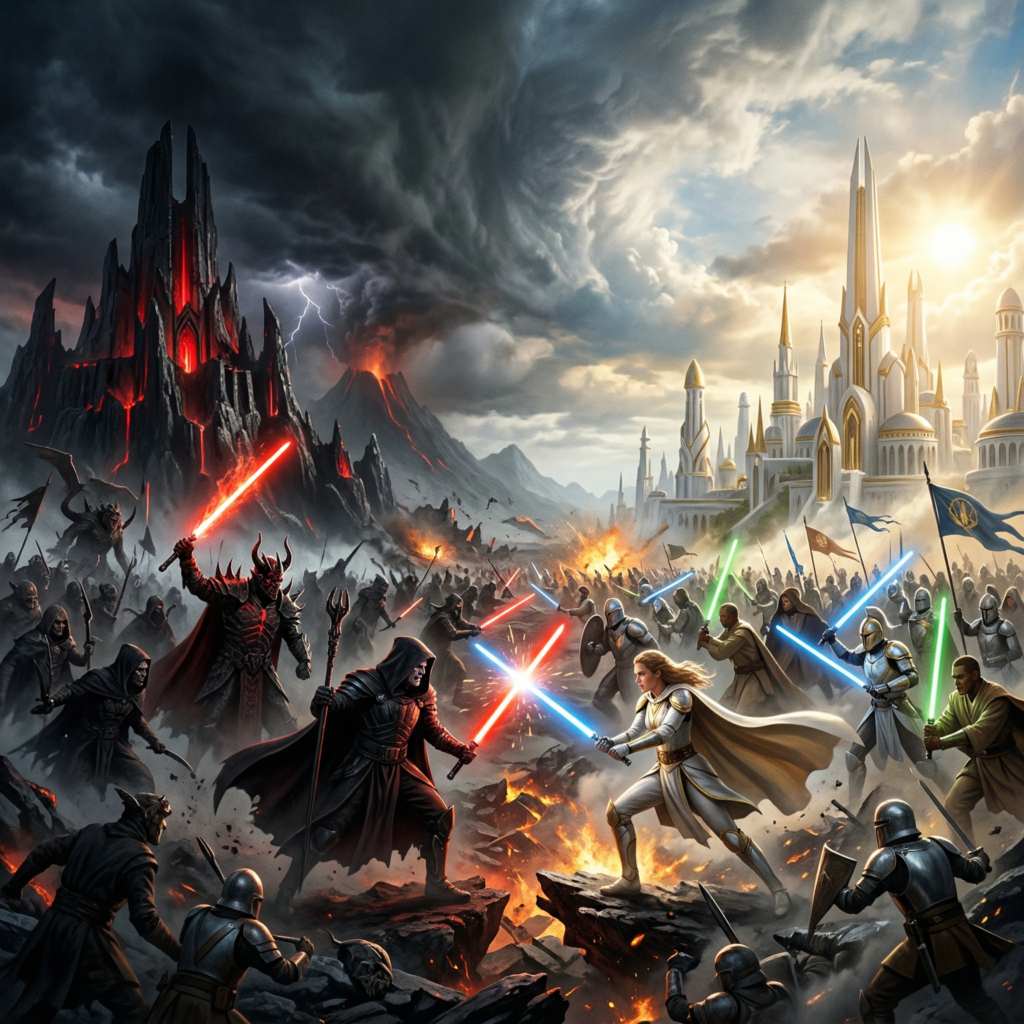
The epic clash of dark vs. light has been a central theme in human history for as long as anyone can remember. It crops up in everything from ancient myths to modern-day tales. This clash isn’t just made-up stuff meant to entertain us. It’s a real reflection of our constant struggle to understand morality.
Many cultures have their take on this eternal struggle. You can find stories of gods battling demons or legendary figures wielding mighty power against formidable foes. These stories give insights into how humans have tried to comprehend good and evil across different ages.
The question of what makes something ‘dark’ or ‘light’ has gnawed at thinkers since forever. Philosophers love to debate the traits that define these opposing forces. Is it about actions, intentions, or the will to power? Or is it about something deeper that echoes within our very souls?
When looking into religious texts, you’ll bump into characters who perfectly embody the qualities of either side. Figures like Lucifer bring dark traits into sharp focus, while characters such as Jesus or Buddha embody ideals recognized as ‘light’. Their stories aren’t just spiritual lessons but timeless guides on the journey of understanding human morality.
Psychology of the Duality: Why Are We Drawn to Darkness and Light?
Ever wonder why tales of good vs. evil grip us so much? There’s something about this duality that’s deeply embedded in our nature. Not just in the stories we tell, but in how we see the world and even shape our personalities. From Halloween costumes that reflect the inner villain or superhero we wanna unleash, to our choice of favorite movie characters, this struggle is part of who we are.
People often find themselves identifying more with one side, but what gets a person to lean towards darkness or light? Psychologists suggest it ties to personal experiences and innate traits. Our environment, upbringing, and even random events play their part. Some of us might see ourselves as guardians of principles, while others get curious, maybe even drawn to the shadowy allure of the forbidden.
What’s wild is how stories shape our perceptions. We’re glued to books, TV shows, and films that make us feel the pull between opposing forces. Devouring these stories influences our ideas about morality and justice. From ancient folktales to modern blockbusters, storytellers have always known how to play up this tension.
Research on fear, empathy, and how we judge right from wrong also sheds light on why we’re hooked. Take studies on moral dilemmas, like the famous trolley problem. We’re challenged to confront our beliefs, recognizing that both darkness and light have shades and complexities. It’s more than a black and white choice — it’s about understanding our full, nuanced human emotion.
Pop Culture Reflection: The Dark Side and Light Side in Media
The clash of dark vs. light is alive and kicking in pop culture. Movies, books, and TV shows are packed with characters wrestling with their darker and lighter selves. Think about iconic films like ‘Star Wars’ where the allure of the Dark Side is as tempting as the promise of the Force. These stories hook us by showing complex character journeys and moral dilemmas.
Pop culture has a massive say in shaping our views on good and evil. Many of us grew up watching cartoons and movies that depicted vivid battles between heroes and villains, setting the stage for our understanding of right and wrong. This cultural influence seeps into our everyday lives, affecting how we see justice and empathy in real-world scenarios.
What’s really cool is seeing how character arcs twist and turn, taking them from one side to the other. ‘Breaking Bad’, for instance, takes us on a wild journey through character transformation. Walter White starts as a pretty ordinary guy and ends up walking a seriously dark path, showing us how nuanced the human psyche can be.
Over time, storytelling has upgraded its game. No longer is it about clear-cut heroes and villains. Today’s tales give us layered characters embodying both sides of the spectrum. This kinda storytelling inspires us to recognize the complexity within ourselves and those around us — challenging us to look beyond stereotypes.
Whether we’re cheering for the good guys or fascinated by anti-heroes, these narratives prompt us to reflect on our values. They act as mirrors, showing us what we aspire to be and what we can learn by embracing both the light and the dark in our lives. Media doesn’t just entertain; it educates and nudges us toward a more nuanced understanding of morality.
Creating Balance: Lessons from the Dark and Light Sides
Finding harmony in a chaotic world can feel like walking a tightrope, especially when the forces of darkness and light tug from both sides. Embracing both aspects of human nature is a step toward inner peace. Instead of viewing them as enemies, they can be seen as two sides of the same coin, offering lessons for a balanced life.
Characters in fiction who struggle with their dark and light aspects often resonate with us because they mirror our own battles. Heroes and anti-heroes alike teach us that understanding and even accepting our imperfections can lead to personal growth. Their stories underscore the idea that redemption is always within reach.
The concept of duality isn’t just philosophical; it’s practical. Facing real-life challenges requires us to draw on a mix of strength and empathy. Whether it’s dealing with conflict at work or personal dilemmas, recognizing the merit in both the dark and light sides can offer a more balanced approach to problem-solving.
In society, embracing diverse perspectives can foster a sense of unity. By acknowledging and appreciating the differences between us, communities grow stronger. Instead of pushing people into rigid categories of good or evil, recognizing the spectrum of human experience can encourage collaboration and understanding.
Balancing the dark and light is less about choosing sides and more about integration. The lessons from legendary figures and fictional characters alike remind us that it’s through acknowledging all parts of ourselves that we truly thrive.